If there's any of the mystery-suspense-tv-shows I have reviewed today I was disappointed in, it was this one. I very much enjoyed Buffy, and I like Sarah Michelle Gellar. I was excited to see this, as one of the great tests of acting is playing two distinct characters. Gellar does alright, but she's swimming in material that is dull at best, ludicrous at worst.
They try the same set-up with The Lying Game, two twins switch places, one is 'evil' one is 'good,' and the good one, upon taking the evil one's place, improves the lives of those around her, and doesn't want to leave. But in the end, she's just a place-holder.
It had a good start to it. Evil-Twin fakes a suicide, and the best thing for the Good-Twin to do, for herself and Evil-Twin, is to take Evil-Twin's place. Good-Twin starts improving Evil-Twin's life, just by being better and nicer. Everyone notices the difference, but attributes it to something else. But then it's shown Evil-Twin faked her suicide, and just wanted not to be collateral damage when she took her husband down.
There really isn't much to say. The show is very dull, and it has been done better. It was done better in the same TV Show season, even, with The Lying Game.
Better luck next time Sarah.
Monday, February 11, 2013
The Lying Game
This show is now into its second season, and has been happy to hand over answers a lot faster than Pretty Little Liars was. By the second season, both characters know who their birth mother and father is, and the show has it stacked so we know who the 'villains' are of the piece.
And boy, do we have some great villains. They're all Chessmasters with good motivation, and good points to them. One guy killed a person, but absolutely adores his daughter. One woman is trying to break up a family because she wants the majority of that family to be her family. One woman is a bit of a Ritch Bitch in a tough spot, but has been noted and proven to have good spots and points.
You can feel for each of them, and hate each of them. Often, these Chessmasters turn on each-other too, making for great entertainment.
At the heart of it, are three people who are considered the protagonists 100% of the time. We're always supposed to feel for these people, and we do. They're the collateral damage in the Chessmasters's games, and if they don't shape up and join the fight, they'll lose what they've fought so hard for. It's great entertainment.
Pretty Little Liars
Today I'm going after the soapy-suspense-tv-shows, starting with Pretty Little Liars. This show is deep in the middle of its third season, which is usually at the point where the soapy-suspense-tv-shows start to have problems.
After all, it opens with a grand secret or question. In this case: who killed Allison? Then, it adds a second one: Who is this "A" harassing us?
These two questions can definitely fuel a season. It can fuel two seasons. But eventually, the audience is going to get tired of hitting a wall when they go looking for answers. Therefore, the show had to start giving the audience some answers. So far, Pretty Little Liars has been doing this well, by revealing that "A" is a bunch of people, which makes sense. With all of the things that "A" has done to them, it had to be more than one person. "A" knows all their secrets, seems to have eyes everywhere, yet is nowhere to be seen. It had to be supernatural, which was a viable option throughout the first season, or a bunch of people.
And now, with A being a bunch of people, the show can start revealing the faces of A, without losing the entire mystery. Giving the audience some answers. This way, the show doesn't feel like its treading on water.
A lot of the biggest issues in the first season, one of the characters dating an older guy, and one of the characters being gay, for starters, have been fully resolved by the latest season. Forward-motion is good!
One of the biggest problems people have been having with the show, however, is how relentlessly depressing it is. If this was happening in real life, these girls would need years of therapy at this point. No spoilers, (by saying who it is), but by this point:
1 girl: Has had two of her best friends be faces of A, and been hit by a car.
1 girl: Had a stalker try to kill her and her lover. Then, she killed the stalker.
1 girl: Was drugged and kidnapped.
1 girl: Found out her lover was a face of A, and is now a version of Break the Haughty (or Break the Cutie depending on your opinion of her.)
Now the only question is, who in the lives of the two girls who have not yet had a friend/lover be a face of A, will have a friend/lover be a face of A? Their torment has hardly been even, and each girl handles it a different way, which makes the show fairly interesting for those who are fans of psychology.
For those who are fans of answers, however, either wait a few years for the show to wrap itself up and read the wikipedia, or just read the book series the show was based off of. (The books don't give the answers to the TV show, note. They split ways two seasons ago.)
Friday, January 4, 2013
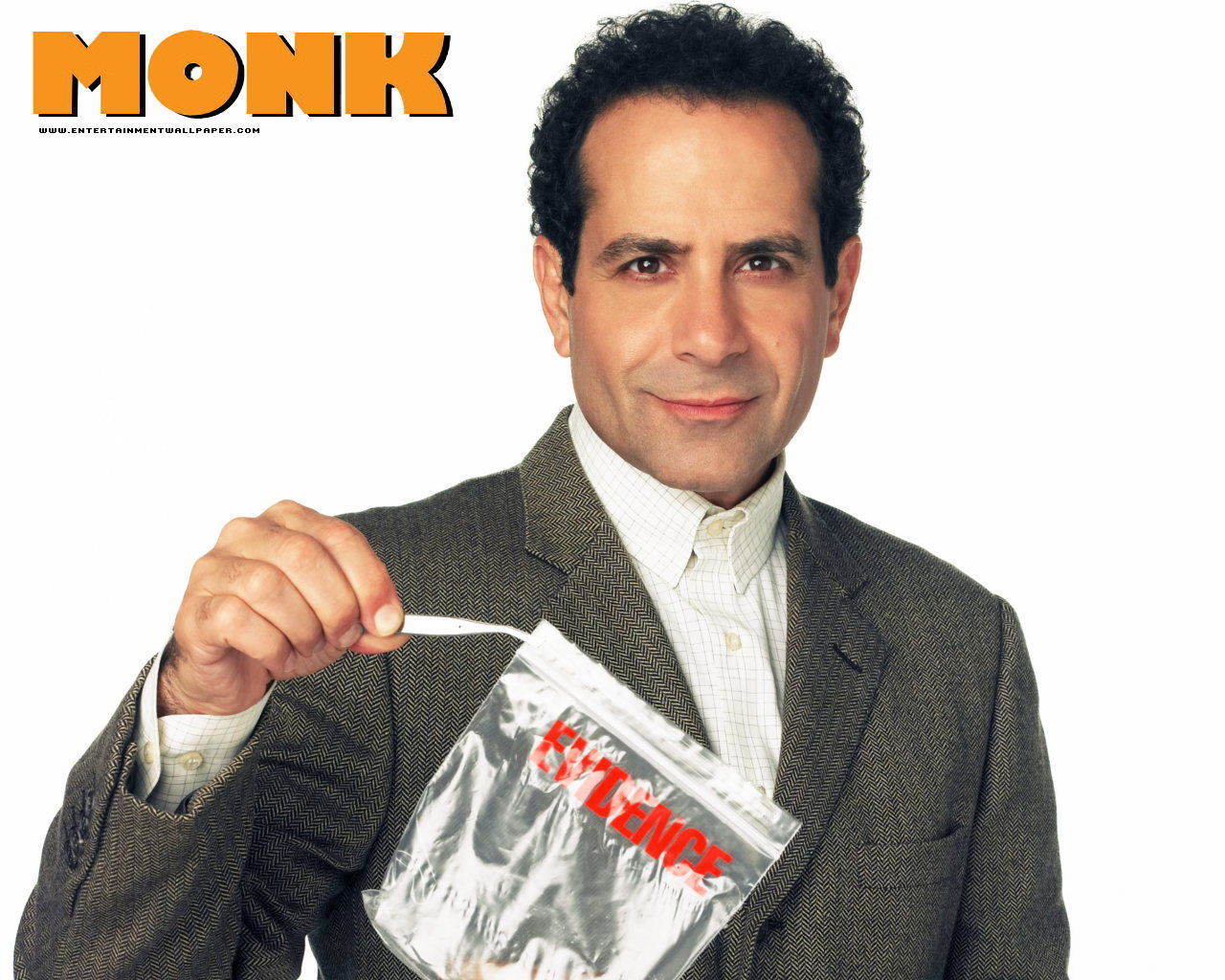
Monk
In my previous post, I discussed Monk, but decided not to save the details for this. It may have been clear that I'm not too fond of this show.
It isn't bad. It's worth a watch. But I had to force myself to finish it due to the problems I discussed, that it never changed. Maybe it just went on too long. But I think, the problem with the show was Monk.
There are two things that make me dislike media:
I have to pause it because it's boring
I have to pause it because I can't stand to watch anymore
Cringe humour can have its benefits, mind you. It is a very valid form of humour. But I think one can only put up with it for so long-or at least, I can. There's only so many times one can pull a: 'oh dear god he's saying that' before it becomes a "oh dear god don't say that... he said it." Like most things, I think humour has to be somewhat surprising. After 9 seasons of Monk, it wasn't surprising.
I don't mean that Monk hasn't earned his place in pop-culture. I just mean that show should have ended like, 4 seasons before it did.
Evolution of TV Shows
This isn't going to be a discussion of a single series, but a pattern in series. Series can, as hard as they try, just tread water, like "Monk," but most of the time, they choose to make a major change.
First, there's the change where they resolve "Will they or won't they?" Look at "Raising Hope," where eventually, the girl Jimmy has been chasing after the whole first season eventually starts dating him, or "Bones," where Bones and Booth get together and have a kid, or even Psych, where Juliet gets together with Shawn. They refuse to drag out the romantic plot, allowing it to evolve.
Switching out Cast
This is something that usually becomes necessary, but is rarely voluntary. When Monk gets a new personal assistant, it changed the show, but not fundamentally. When Monk got a new psychiatrist, it changed the show, but not fundamentally. This was because neither change was willing.
You look at shows like Being Human (UK), which cycles out nearly its entire cast, by series 4, and the changes in the show make it clear that it was prepared for, if not voluntary.
The Riches and Fringe tend(ed) to evolve as an entire show, not just with character-relationships. The Riches sets up several issues in the pilot which could have lasted throughout the series: The stealing of the family's money, the arranged marriage De De is being forced into, and their pretending to be The Riches. Two out of the three of these issues get resolved even before the first season is up, paving the way for a new antagonist that would have never been expected, and an evolution of an old antagonist.
Fringe, on the other hand, seems to build season-long arcs, and sticks with them.
Season 1 was very procedural, slowly revealing a grand plan, which is followed up on in season 2, though Season 2 becomes inherently less episodic.
Season 3 throws the grand plan out entirely, dealing instead with the two alternate realities, and the two versions of the main character.
Season 4 deletes, then brings back, a major character of the cast.
Each season is fundamentally different from the previous one.
Romantic Changes
First, there's the change where they resolve "Will they or won't they?" Look at "Raising Hope," where eventually, the girl Jimmy has been chasing after the whole first season eventually starts dating him, or "Bones," where Bones and Booth get together and have a kid, or even Psych, where Juliet gets together with Shawn. They refuse to drag out the romantic plot, allowing it to evolve.
Switching out Cast
This is something that usually becomes necessary, but is rarely voluntary. When Monk gets a new personal assistant, it changed the show, but not fundamentally. When Monk got a new psychiatrist, it changed the show, but not fundamentally. This was because neither change was willing.
You look at shows like Being Human (UK), which cycles out nearly its entire cast, by series 4, and the changes in the show make it clear that it was prepared for, if not voluntary.
Plot-based Changes
The Riches and Fringe tend(ed) to evolve as an entire show, not just with character-relationships. The Riches sets up several issues in the pilot which could have lasted throughout the series: The stealing of the family's money, the arranged marriage De De is being forced into, and their pretending to be The Riches. Two out of the three of these issues get resolved even before the first season is up, paving the way for a new antagonist that would have never been expected, and an evolution of an old antagonist.
Fringe, on the other hand, seems to build season-long arcs, and sticks with them.
Season 1 was very procedural, slowly revealing a grand plan, which is followed up on in season 2, though Season 2 becomes inherently less episodic.
Season 3 throws the grand plan out entirely, dealing instead with the two alternate realities, and the two versions of the main character.
Season 4 deletes, then brings back, a major character of the cast.
Each season is fundamentally different from the previous one.
Reboots (and rotating cast)
Sometimes a show will reboot itself. This is usually by design, and rarely out of need. Examples of this are: Every reality tv show ever, Skins, and American Horror Story. Reality TV shows have to; it's part of their design. Each season gets a brand new cast, with new challenges (so they can't cheat off of the old ones in game-based ones).
Skins and American Horror Story, on the other hand, make it an artistic choice. For Skins, it seems to be a character reason. For American Horror Story, it seems to be a tonal reason. See, in Skins, each episode is a character study. There tends to be a few episodes about everybody (first and last of the season, typically), to make the connections. At the end of two seasons, they create a new cast.
American Horror Story, on the other hand, seems to understand horror. They understand that it is unknown, but prevalent. Because of this, each season is a total reboot of the series. The first season starts in a haunted house, the second in an asylum. Giving each setting only a season allows it to prevent us from becoming too familiar with the horrors, and prevents it from repeating itself.
This is very rare, as people usually identify with characters. It's hard for people to get behind the idea of a show, rather than the characters of a show.
Shows in Stasis
It's strange that when I looked back through the shows I had watched, there was only one show that leapt out at me as one that never changed. I've mentioned it a few times now, and that's "Monk." Why do I say that? It changed, didn't it?
Now, metaphorical audience member, answer me this.
Did Monk ever (permanently)
Change his job?
Change his house?
Change as a character?
Sure, some of the people around him changed, but Monk himself never changed. The show was afraid to take any risk. When he got a new house, he immediately gives it up. When he goes on meds, he immediately gives that up. Not because they don't work, but because they interfere with his job. When he gets the job that he was going after for 9 years, he isn't happy and quits. The show loved the status quo.
Some of these are understandable, at least, from a writing standpoint. Monk on meds? He wouldn't be himself! But others seemed to be based on a fear of change. They didn't want to write Monk the police detective. They wanted to write Monk the P.I. That's fine--but it can't last forever.
Conclusion
I'm all for shows that evolve. When it goes wrong, it can go horribly wrong, but if the show never takes the chance, the audience may very well get frustrated, and feel like their beloved characters are treading in water. If the male and female lead have had unresolved sexual tension for 14 years, will we still care? Maybe the resolution just wasn't worth sticking around for.
Saturday, December 29, 2012
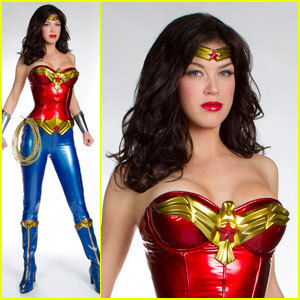
Wonder Woman 2011
It's not good. It's not bad. It's not even interesting. Wonder Woman (the un-aired 2011 pilot) is full of half-baked ideas. If it just picked one of the half-baked ideas, it could have made it. Instead, it just tries to throw all ideas it was even remotely interested in, and hope one sticks.
I was wondering if I really could criticize a pilot for trying to set up too much for a series, but I thought about it a bit more, thinking about pilots of other shows. A pilot has to do so much already. it has to introduce a bunch of characters, the main premise, and the setting (which is often a character in and of itself.)
I don't think this pilot understood that concept. Each character is glossed over, there is no clear main premise, and the setting is poked at, but mostly, again, ignored.
Wonder Woman opens like a crime procedural's victim of the day, which, incidentally is the most characterized person in the pilot. He's a black teenage boy, who presumably receives a scholarship to go to college, before a "near exploding heart" causes eye-bleeding. (I don't get it either.)
Then, ideas are introduced and dropped in quick succession:
* Wonder Woman sells action dolls and other products to fund her crime-fighting.
* Wonder Woman doesn't play well with police.
* Wonder Woman breaks up with her boyfriend before becoming Wonder Woman because he might get hurt.
* Wonder Woman inexplicably has an alternate identity.
* Wonder Woman has a cat.
* Wonder Woman is a Woman, hear her roar.
* Her ex-boyfriend is back, but he's married!
The only idea that looks like it'll get followed up on is the idea that she doesn't play well with police, but the ex-boyfriend shows up, saves the day, and it looks like this too will be quickly ignored.
Really, the most interesting idea here, and the most topical idea (even during the time it was made) is the idea of the relationship between the super-hero and the police. If the pilot had ended with Wonder Woman potentially facing legal ramifications for what she did, as parts of the episode seemed to be building up to, (Like a pundit exclaiming she wasn't exempt from search and seizure laws) then it might have been going somewhere.
However, it seems mostly confused.
I don't know what it is about a female super-hero that seems to get writers confused. You give the hero tits and suddenly you want to shoehorn in rom-com misunderstandings like her ex-boyfriend having been in town for a while but not talking to her and being married, alternating with feminist outbursts (like her saying that the 'tits' on the action figures are too big to properly represent her.)
I would have been fine with them treating her as an essentially male super-hero for the pilot episode. You'd have had plenty of time to show us she was a woman.
I was wondering if I really could criticize a pilot for trying to set up too much for a series, but I thought about it a bit more, thinking about pilots of other shows. A pilot has to do so much already. it has to introduce a bunch of characters, the main premise, and the setting (which is often a character in and of itself.)
I don't think this pilot understood that concept. Each character is glossed over, there is no clear main premise, and the setting is poked at, but mostly, again, ignored.
Wonder Woman opens like a crime procedural's victim of the day, which, incidentally is the most characterized person in the pilot. He's a black teenage boy, who presumably receives a scholarship to go to college, before a "near exploding heart" causes eye-bleeding. (I don't get it either.)
Then, ideas are introduced and dropped in quick succession:
* Wonder Woman sells action dolls and other products to fund her crime-fighting.
* Wonder Woman doesn't play well with police.
* Wonder Woman breaks up with her boyfriend before becoming Wonder Woman because he might get hurt.
* Wonder Woman inexplicably has an alternate identity.
* Wonder Woman has a cat.
* Wonder Woman is a Woman, hear her roar.
* Her ex-boyfriend is back, but he's married!
The only idea that looks like it'll get followed up on is the idea that she doesn't play well with police, but the ex-boyfriend shows up, saves the day, and it looks like this too will be quickly ignored.
Really, the most interesting idea here, and the most topical idea (even during the time it was made) is the idea of the relationship between the super-hero and the police. If the pilot had ended with Wonder Woman potentially facing legal ramifications for what she did, as parts of the episode seemed to be building up to, (Like a pundit exclaiming she wasn't exempt from search and seizure laws) then it might have been going somewhere.
However, it seems mostly confused.
I don't know what it is about a female super-hero that seems to get writers confused. You give the hero tits and suddenly you want to shoehorn in rom-com misunderstandings like her ex-boyfriend having been in town for a while but not talking to her and being married, alternating with feminist outbursts (like her saying that the 'tits' on the action figures are too big to properly represent her.)
I would have been fine with them treating her as an essentially male super-hero for the pilot episode. You'd have had plenty of time to show us she was a woman.
Sunday, December 16, 2012
The New Normal
When I delved into my past looking for tv shows I specifically didn't like, I didn't expect so much vitriol. I was supposed to kill this with hours of meditation, art therapy, and religion. So with this, I'm moving back up the scale of Cooper's Likability. Today's show is a show that I surprisingly like. Will I finish season 1? I doubt it. Have I been okay with every episode seen so far? Yeah. I really have.
Yes, there are three pregnant people in this picture.
People.
The biggest jump this show took was the two gay leads. I didn't think it was going to make it. In fact, I was pretty sure this show was going to take a flying leap and land face-first like I think Glee did (in my happy place.) And while one of them is the absolute stereotypical homosexual (that Nowhere was conspicuously absent of), the other is a normal dude who happens to be gay.
It touches on a lot of issues that normally, would make this show somewhat un-watchable for me. Young sexuality (Shania, the little girl, falls in love with a boy, is kidnapped by her grandmother, along with the boy, and taken to Planned Parenthood) teen pregnancy (two out of the three female leads were teens when they had their kids, the other is a kid), political divisions (the mother is a staunch republican who actually manages to stay just barely likable by being more than just the stereotype I'd expected her to be), and of course, the center of attention is Goldie's surrogate pregnancy for the two gay men.
I expected this show to run right up to the screen, climb on top of THE BIGGEST soapbox, and start screaming its lungs out. It does have some of that, sure. There are moments you don't expect from this sort of attitude, however. It isn't afraid to swing both ways. That's this show's greatest value. The aforementioned kidnapping ends with the boy's mother being very glad it happened, because she didn't know when she should talk to her son about sex, and it prompted that conversation.
It isn't exactly funny (rarely does it get laughs from me, in fact), and it isn't exactly great. It may have very well already earned its place in history though, and that's the best reason to give it a go.
Subscribe to:
Posts (Atom)