Wednesday, July 24, 2013

Video Games: Dishonored

I've been taking a break from TV over-saturation (don't worry, I found some very shitty tv shows to review as well, plus of course I'm reviewing Netflix's "Orange is the New Black.") to kill everything everywhere.

That's the point of video games, right?

I have some major problems with Dishonored. I think it's clumsy, judgemental, and not sure of what it wants to be, and too short.

So why can't I stop playing it? I'm 27 hours in. I've played the game twice over, and I have yet to play the DLCs! (I was only 5 hours in when I decided the DLCs were worth buying, if only due to the Steam sale and the fact that the game was clearly wrapping up.)

Why do I like the game? First off, I'm a sucker for stealth. I like playing Skryim as an archer-assassin, Fallout as a sniper, and the Batman Arkham games as Batman. Dishonored gets a big win for that. I like the setting; scratch that, I LOVE the setting. I'm not a huge historical anything fan, but the steampunk elements really appealed to me. The plot really interests me, though I do agree with Yahtzee from Zero Punctuation that Corvo should have been more: "Wait a minute! I didn't kill her!" It might not have done any good, but it was a lot harder to swallow Corvo just taking being accused of killing his implied lover. I love open worlds that encourage me to climb on the rooftops. I love how the game encourages you to figure out your own way through the game, and is fairly smart about it. I remember having quite the shock the first time one of the guards found the body of another guard, and immediately began looking for me. The AI pays attention to what you do in the environment, and that's fantastic.

However, the longer I play the game, the more it rubs me the wrong way about a few things. As I said, it was very judgemental.

I don't mind games that have a morality meter, and as hamfisted as this game is about its, Dishonored probably has one of the better-done morality meters. (I would call Fallout New Vegas as the best, but this is a close second.) I like games where the game pays attention to you: it really adds to the immersion. The more people you kill, alarms you raise, and attention you gather, the harder and darker the game gets. You are a marker  for the game's place on the Sliding Scale of Idealism vs Cynicism. If you don't kill anybody, or barely kill anybody, the game is fairly light. (The achievement for completing the game with low chaos, which is how the game keeps track of how many people you kill, is called "Just Dark Enough/") Emily, the only child in the base game, is the most stark example: in a low chaos run she is called Emily the Wise, but in a high chaos run her last words in the game are: "The others are all dead, aren't they? Good. I was always gonna have them killed anyway."

For the most part, the game's reaction to how you play makes sense. The more people you kill, the more food for the plague rats, and the worse the plague gets. The exception the game doesn't account for being if you get the ability to make bodies disappear after you kill them. The more trouble you make, the more guards will be around, and the more people will be on alert for you. As you are heavily implied to be Emily's father, and that Emily knows this, it makes sense that she would take her sense of morality from you.

I also think it's neat how the dialogue changes based on how you play the game. If you complete the prologue of the game without being seen or killing anybody, you will overhear guards comment in later levels about how you were a ghost. If you complete the prologue inversely, by killing anything that moves, you will overhear guards say things like: "How many people did he kill on his way out of there?" and imply there was no way you couldn't have not killed the empress. I don't even mind how, the more vicious you are, the more desperate the people are at the end of the game. It makes sense: by this point they know you're coming, and they know you will show no mercy.

I don't know how I feel about you representing the hope of the city, however. The scene that comes to mind occurs in the High Overseer level. You come across three overseers, and what happens depends on your chaos level.

In low chaos: one of the overseers is showing symptoms of the plague. They beg the other two to kill them so they can't spread it. They do, but apologetically.
In high chaos: one of the overseers is showing symptoms of the plague. They are accused of trying to hide it, and brutally murdered by the other two overseers.

It's too early in the game for you to have a true effect on the city, and the people in it. They don't know your end game. They don't even know you're coming, but the game is still paying attention. And it has the eye of your grandmother: antiquated and judgemental. (That's how your grandmother is, right? Right.)

The morality system encourages the stealth, yes. The biggest problem I have with it is: if you are encouraged to not kill anybody, even within the plot of the game (you are able to find a non-lethal way of taking out every single person you need to in the game if you are paying attention) why does the game hand you twenty ways to kill someone? You always have a sword in your right hand, and if you play the game like the game wants you to you are never going to use it. You are still stuck with the sword, however. You can't switch it out for another ability, or anything like that.

By being given a grenade, mine, sword, two lethal and one non-lethal variant of crossbows, and a gun as weapons, along with the ability to summon plague rats to eat someone alive, the ability to possess someone and make them leap to their death (and quickly unpossess them so you don't die with them) and do things such as stop time as someone shoots at you, possess them and move them into their own bullet so they die, the game is slyly giving you a knowing wink and going: "Come on. I know you want to! I won't judge (I totally will.)" If you sneak above a guard, it will tell you if you press x, it'll just kill that guy for you. And of course, they create a whole sophisticated combat system they encourage you not to use. (The sword fighting is awesome, and you can one-shot kill people if you fight a chain of them, and upgrade an ability.)

If you take the 'kill everything' route, the game is incredibly gorey. There's a bit of psychopathic satisfaction in knowing you can decapitate someone and carry their head around that section of the level as a good luck charm. The game always slows down when you kill a target, so you can enjoy the view of your character throwing a sword in their neck.

On top of all that, while sneaking around, you will more than once find signs of humanity in your victims. It is an odd thing to complain about, yes, that you will witness guards talking about getting married, or hear about their affairs, but the game seems confused on even that. The heart mechanic, a very interesting and creepy piece of equipment that tells you the secret story behind everyone, has generic lines for guards. You can hear a guard talking to a maid about how they should just run away together, point the heart at him, and hear: "He always eats well, even as his wife and child grow thin."

On top of all that, one of the studios involved in making the game is called: "Revenge Solves Everything." The game just needs to tell me where it stands: am I a bastard for stabbing that guy, or not?

I am not denying that Dishonored is a fun game, or that you can do very fun things with it. Here's a guy who sets everything up as a horrible accident, for example. I just think if somebody had sat down in the planning stages and cleared up where the game is on just murderizing everything, it would have been an amazing game.

Wednesday, May 1, 2013

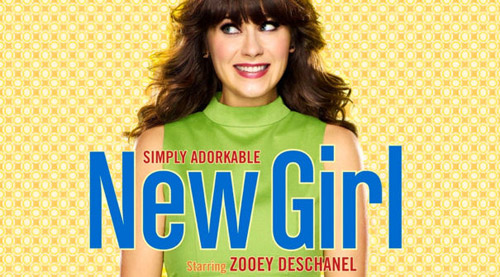
New Girl


I think this show exhausted my 'quirky' tolerance. Seeing as that's all this show seems to be about. ZOOEY DESCHANEL'S CHARACTER IS QUIRKY.   This show screams it every minute of every episode. It has good moments, mostly with the guys, and as a girl-centric girl, I never thought I'd say something like that, but it feels like this is pretty much a stand-up routine about a crazy girl that just never ends.

Sure, I was okay with it at first. I could handle the mess of hormones and crazy that Jess was, for quite a while. But I just couldn't keep handling the zany levels of quirky.

I smiled once. (The least funny game they've ever played. Hee./) Does this make me a heartless person? Maybe. Who could get tired of Zooey Deschanel? Me, apparently.

Hart of Dixie

Like Dexter, I would give this show different ratings based on its season.

Season one kinda sucked. I don't know why I kept watching it, and frankly, when I did, I usually binge-watched it when Hulu told me my episodes were about to expire. It was about a whiny, neurotic girl thrown from the city into a more rural town than I'm from. (And considering that at least 60% of my High School were farming kids, that says a lot).

Then, character development happened. Yes, Dr. Hart is still neurotic, but it is more frequently played straight, laughed at, referenced, and thoroughly better handled than it was in the first season. Lemon grows from a spoiled bitch into spoiled sweet. Dr. Brieland gives up his vendetta against Dr. Hart, which greatly helped the show improve.

So now, it focuses a lot on relationships, and Dr. Hart not knowing what she wants in life. While yes, this is definitely a 'girl show' it's a fun girl show. The tangled relationships all feel real, and so do the characters.

I am concerned that, with Lemon and Wade owning the Rammer Jammer together, that the show might go downhill again, focusing mostly on their squabbles, but it's an example of the show growing, taking a risk, and I can't argue with that.

Raising Hope

There are two forms of comedy I love: nonsensical comedy and satire. A satire is poking fun at something that genuinely happened, or happens. A nonsensical comedy is when it's revealed Maw-Maw's mother is alive, so Maw-Maw's mother is brought in to live in the house. Maw-Maw's mother and Maw-Maw have had a feud for years, until Maw-Maw gives her mother a quarter. The mother then shits herself to death. It's all okay, because Maw-Maw can't remember her mother's visit, but seems to think she and her mother reconciled sometime long-ago.

Raising Hope manages to hit both of those, but is usually just a straight nonsensical comedy.  Jimmy, previously known as doofus--not in a mean way, I call my rabbit the same thing--fathered a baby to a serial killer, and is now trying to raise it. He still lives with his parents, and he's crushing on a girl who works in the supermarket. Oh, and his great-grandmother, Maw-Maw, who has Alzheimers, lives with them. Whereas The Riches couldn't figure out how seriously it wanted to take itself, specifically when it came to it's character's drug habits, Raising Hope knows how seriously it wants to take itself: Not at all. Especially when it comes to Maw-Maw,  whose Alzheimers moments are always played for laughs.

Sabrina has to be my favorite character, who seems to be the 'straight man,' to the family's crazy guy, at first. Sure, she draws faces on the fruit and re-arranges the store she works at, but that's just because she's bored.  Then it's revealed that she sleeps with pantyhose on her head at night. Why? Spiders.

'Nuff said.

None of the characters, except Sabrina, are particularly intelligent, moral, or rich. Unlike shows like Revenge, Pretty Little Liars, House of Cards, and so on, I feel like I've met most of these people, making this comedy strangely relatable. Sure, it takes place in a not-quite-reality, but so long as it's a consistent not-quite-reality, I'm perfectly fine with that. (The logistics of them being allowed to keep Maw-Maw just because she threatened a few cats, and a serial killer being let go because she survived her execution, are nonsensical, but standard in its own universe.)

This is definitely not for everyone. While it's a smart comedy, it's not a realistic one, and it could bother some people.


The Riches

Well, to relax the vitriol Hemlock Grove brought out of me, I watched The Riches again. Now again, I adore two actors in this show. Eddie Izzard, of course, and Shannon Marie Woodward. Now, let me be clear. This show isn't a good show. It just doesn't piss me off half as much as Hemlock Grove did. Unfortunately, while I loved it the first time, I didn't like it that much the second time.

The sexually confused child is handled very well. Their gypsy culture is handed... alright. (Not that I know anything about gypsy culture.) Unfortunately, drugs are the center of the show, and it's handled  very inconsistently. One minute, the mother has a total meltdown because she can't get her 'urban' drugs, next she's being introduced to 'suburban' drugs, next her husband goes on quite a hilarious drug trip. (Eddie Izzard is much too good at comedy for that not to have come out as funny as it did.)

The youngest kid doesn't seem sure whether he wants to be a girl or a boy. He's introduced as a girl, then revealed to be a boy. The family is very supportive of this, but tells him for this con, where they pretend to be a dead guy's family, he has to choose a gender.

The only bits worth watching were not found on youtube. The introduction, where they pull off a grand con to get presents for the mother getting out of jail, and the drug trip in episode 10. After that... it isn't really worth it. It isn't that this show is bad. It just wasn't good either.

I think all the show's problems stem from the fact that, even by the second season, The Riches hasn't figured out what it wants to be. Hiring two great comedic actors, Shannon Woodward and Eddie Izzard, for what seems to primarily be a drama. It opens with a comedic scene, and as an author, I know openings are there to set the tone for the rest of the work. It ends on a cliffhanger that can only go badly, and to be honest, if the cliffhanger had been resolved, I might have liked the show better. This isn't fair to the show, but it's true.

It really does seem to want to be a drama, with Minnie Driver's character's drug problem, and the youngest son's transgender issues being taken very seriously--most of the time. The arranged marriage plot is very heavy-handed, but the comedy just seeps in, with the girl being arranged to marry a very mentally challenged man, who the show alternately makes fun of and attempts to take seriously.

So perhaps The Riches was attempting to be a Dramedy, but it never really finds the balance between comedy and drama to really make it work.

Netflix Original Series Round-Up: Hemlock Grove

A few posts back--Revenge, to be exact--I mentioned that there was a show I had watched recently that brought up way too many questions, and yet way too few answers. This was the show.

While I loved House of Cards, Hemlock Grove can go die in a fire. My vitriol may have a lot to do with the, in my opinion, unnecessary cat sacrifice--funny how I get more upset about a cat's death than a human's in tv shows--how unlikeable most of the characters are, how little they answered, how much it feels like they pulled the ending out of their butt, how much I hated Famke Janssen's accent, and how unnecessarily, unrepentantly, and unceasingly dark it is.

Now, let's be fair. I know the cat sacrifice thing bugs me because I'm an animal lover. I know the accent thing is very trivial, no matter how out-of-place it feels. And I know DARK shows have their place. But I feel that dark shows should have their light moments, and Hemlock Grove never did. I didn't need a laugh, but a smile, or a quiet moment, would have been nice.

Hemlock Grove opens with what is called a cold-opening, where we are introduced to someone who gets immediately killed, and then it never stops.

The two main characters are a werewolf and a vampire. The vampire's sister, Shelly, is some sort of completely unexplained creature--all we know about her is that it was heavily implied she was brought back from the dead when she died as a baby--with the ability to manipulate light, glow when she feels emotion, inability to speak, very large stature, overly large eye, scars all over her head, and baldness.

Shelly exemplifies the 'all questions no answers' philosophy this show has. Sure, the whole 'died as a baby' thing threw me a pretty good bone, but it was never followed up. WHY DOES SHE GLOW? Why can't she talk? Why is she so monstrous looking? Why? Why? Why?

I didn't need all the answers, but one or two would have been very helpful.

The nature of werewolves is explained thoroughly, and quickly. The nature of vampires might as well have been Grandma's secret recipe for all we knew about them, until the end. Even then, the questions move along. We are introduced to an ancestor of the vampire character, who had a movable tail mid-back. She cut it off, and died, and became a vampire. Apparently, vampires are created when they die of their own hand. (Important.) But they also have to be born of a vampire?

Now, I'd like to discuss two reveals, and how pissed they made me. Due to the spoilery nature, they will be vague. Do not read until the next sentence in bold if you don't want spoilers. 

So, first, the rogue werewolf. It's the white-haired girl. This was almost completely pulled out of the show's ass. The retrospective explanation did help a lot, and the death of the two blonde girls did make sense, in retrospect. However, the girl's reasoning didn't make a lick of sense, even in a 'oh, she's a crazy person' way. The character spends most of the time in a mental hospital, and she still gets out to go kill people. There were no clues whatsoever.

I will give the werewolf reveal props, however. The scene where she transforms needs to be used in special effects schools, because it was good. It was even better than the first transformation scene. The actress gets credit too: sexual release she got from transforming was effectively creepy.

Now secondly, the father of the 'immaculately conceived baby.' This one had at least a little more lead-up, with the father going and raping a girl, then mind-raping her afterwards to cover it up, before the reveal. And the father is the only one shown to have mind-powers like that, and the father of the girl even suggests she had been raped, which she had.

Come to think of it, I can't find a totally logical reason why I hate that reveal. I just do. Maybe it has something to do with the fact that you are expected to like this character enough to follow him. Shows can do anti-heros well, but there are some lines people just can't cross, and still come off as likeable.

I have to compare this to House of Cards, because the cast of both series is supposed to be full of 'anti-heros:' people who aren't good people, but still likeable. The difference is how they handle it: House of Cards makes it work. Every character, no matter what lines they crossed, still came off as fascinating or likeable. By the end of Hemlock Grove, none of the characters we've spent any time with--excluding Shelley--come off as likeable or fascinating.

Netflix is perfectly happy to cross some lines due to freedom from censors. It's VERY gorey. It's sexual in a very creepy way--like the reveal that the evil werewolf goes straight for the female victim's crotches, or, as mentioned before in the spoiler-paragraph, the evil werewolf's sexual release before their transformation scene. It's dark. There's swearing. Nudity galore. Most egregiously: a girl kisses a half-corpse who is nude. Why? IT'S EDGY. At least the rape scene, graphic as it is, has some foreshadowing, character-development-implications, and so-on, to it. The half-corpse thing gets the girl in the mental hospital, which just raises more questions later on. The only thing it can imply is the girl's complete mental collapse, which could have been shown effectively any other way.

There are only two characters that are completely likeable from start to finish, (three if you count the cat who gets sacrificed) and one dies, and one gets framed for a murder she didn't commit, and has to leave town.

The mother of the werewolf disappears for no good reason--yes, her trailer was destroyed by hicks who were destroying it for completely illogical reasons themselves--but she leaves her son with a family of vampires she openly admits she hates, with almost no justification whatsoever.  Then, the werewolf leaves the vampire completely alone, which destroys the vampire. This is done for no clear reason. He gets cleared of the murders, but still feels he has to leave town.

The most frustrating thing about the show was probably the entire town jumping on the 'he's a werewolf!' train. I've seen groupthink. I've studied groupthink. But I highly doubt groupthink would cause people to collectively agree a man committed crimes an animal clearly did, and brush it off as: 'well, he's a fictional--as far as we know--creature!'

How do they get this idea? Crazy girl says so. Yes, they blame a man for murders based on the word of a crazy teenager, who has based her decision about the boy being a werewolf from his complete and total sarcastic response to: "Are you a werewolf?"

This show left me very angry, very frustrated, and very disappointed. When it was supposed to be disturbing, it was just confusing. When it was supposed to be heartwarming, it wasn't. When it was supposed to be intriguing, it was frustrating. When it was supposed to make you sad, it made you angry.

Despite my dislike of Famke's accent, the actors all did a fabulous job. They just had a shit script to work with.

And for those who want to see the only worthy scene (very gory), the werewolf transformation, here it is, in all its naked and disgusting glory:

The second transformation was much better, as the special effects in here are a bit iffy when the skin starts ripping in the back, but that would be spoilery and not on youtube, so I'll settle for this one.


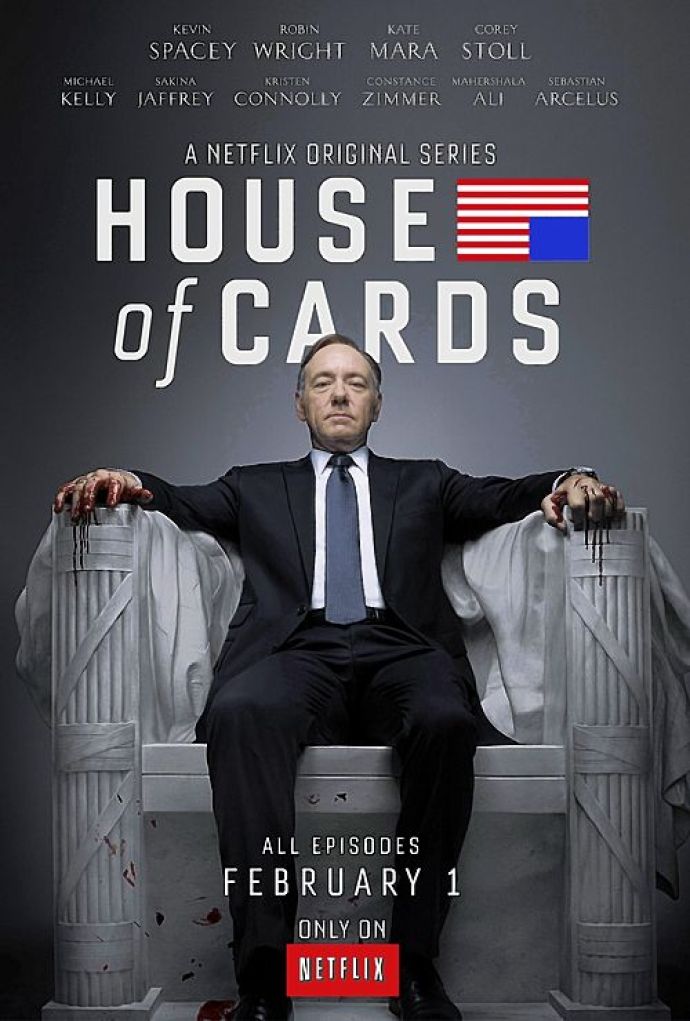
Netflix Original Series Round-Up: House of Cards

If this is how Netflix is going to use its unique powers, creating great original series and bringing back Arrested Development, they will get all my money.

This show can most easily be compared to Revenge, in that every single character is a chessmaster. The plot is set in motion by a betrayal of Frank Underwood by the newly elected president, who decides to go against his promise to nominate him for Secretary of State. Frank then destroys everyone, everywhere.

I almost wish I was kidding, but I'm not. If Frank didn't go on his rampage, nobody would be where they are by the end of the first season. Most notably, a character would not be dead.

In such a realistic series as this, and one with a very lovable anti-hero (I think he becomes an anti-villain at the end of the series) the death mid-season comes as a complete shock, and a moral-event-horizon for me.

Enough stabbing-in-the-dark at vague plot points, let me introduce the chess masters:

Frank Underwood: Obviously.
Claire Underwood: She runs a charitable organization, but that doesn't mean she is charitable.
Zoe Barnes: She may be young, but she's VERY clever.
Gillian Cole: A bit of a spoiler, but by the end of the season, you'll see why she makes the list.

These three, and by the end of the season, four (and two mystery chess-masters), are constantly running into each-other, and plans both benefit and fall apart thanks to each-other.

This show screams Gritty. It opens with a dog being shot, a line that not many shows cross. The protagonist is revealed to be bisexual, and that bit of himself is portrayed positively, which is also a line not many are willing to cross. He is in an open relationship with his wife, meaning they both cheat on each other, but they both know who with and when the cheating happens, and don't really care. A character is an alcoholic and a drug addict. Another is a prostitute. Another gets into a very abusive relationship with a much older man. There is nudity. References to self-injury and suicide. Netflix knows that it doesn't really have moral guardians to answer to. After all, children aren't really going to stumble upon this show while channel-surfing. They take full advantage of this fact.

It is NOT an easy show to watch, but I am still somehow hooked. I like all of these characters, including Frank, which is quite an impressive feat of writing and of course I suspect has much to do with Kevin Spacey, his actor, as well. All of these characters could have been considered to cross the line at one point, but they're all still likeable somehow anyway. That is an achievement.